
Guide
Restaurant Build Out Cost
Why restaurants cost what they do, and what a good second-generation space saves you.
- Licensed Texas General Contractor
- Bonded & Insured
- Workers’ Comp Carried
- BBB Accredited A+
- NARI Member
- On Site In All 50 States
- Escrow Services Available
The Direct Answer
A restaurant build-out in a cold shell commonly runs $200 to $400 or more per square foot, before kitchen equipment and furniture. A well-equipped second-generation restaurant can come in well under that, if its hood, grease interceptor and walk-in suit your menu. The kitchen, not the dining room, sets the number.
Where The Money Goes
The systems that make a restaurant a restaurant, and why each costs what it does.
| System | Typical Installed Range | What Drives It |
|---|---|---|
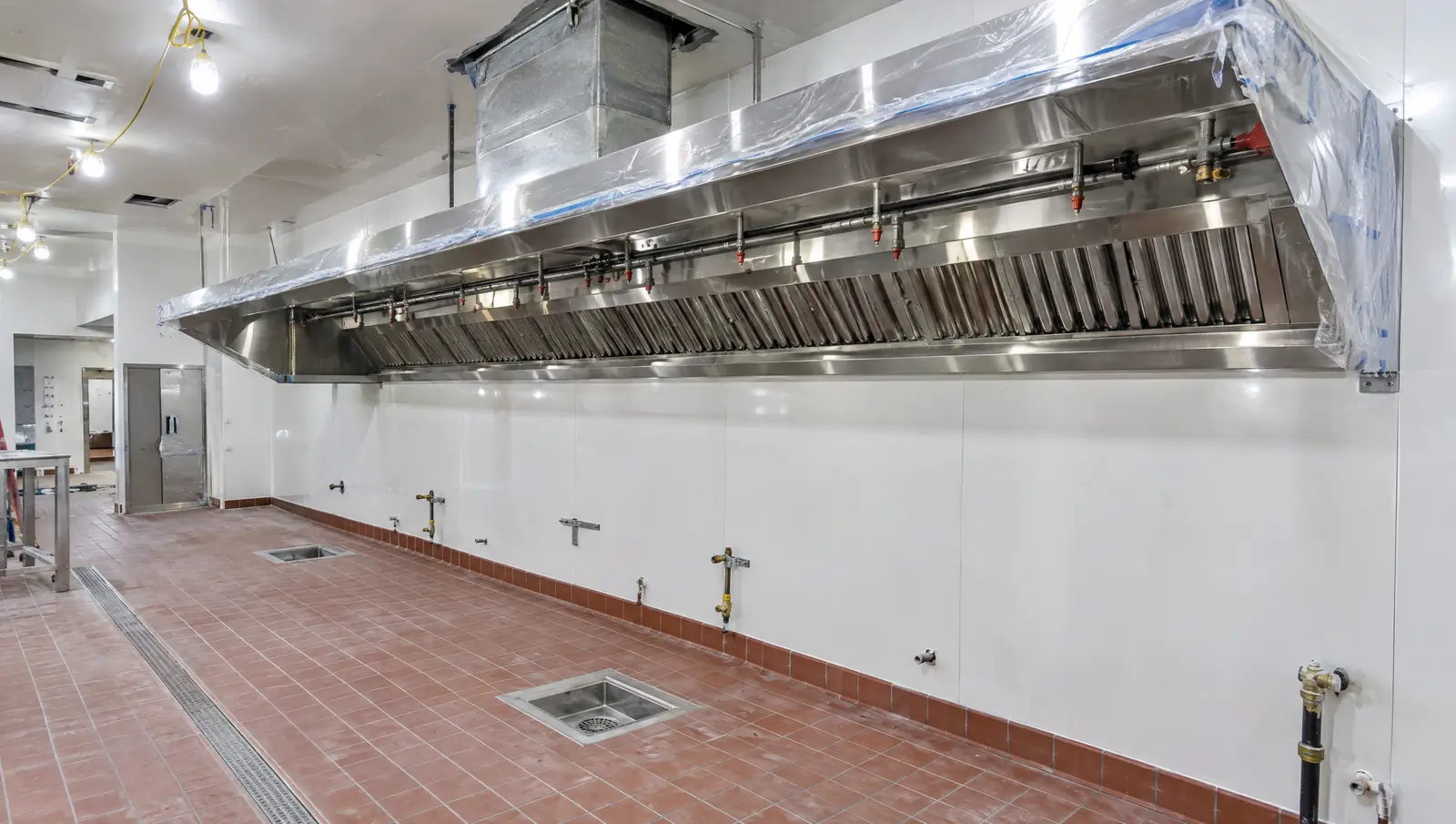
| Type I hood, fire suppression and exhaust fan | $25,000 to $75,000+ | Hood length, the cooking line under it, duct run to the roof, and whether the roof needs structural work to carry the fan. |
| Make-up air unit | $10,000 to $40,000 | Every cubic foot the hood exhausts has to be replaced, tempered in most climates. |
| Grease interceptor | $5,000 to $30,000+ | Under-counter trap or an in-ground interceptor, set by the local utility. An in-ground unit means breaking and pouring slab. |
| Floor sinks, drains and slab work | Varies widely | How many fixtures sit away from existing lines. Every trench through the slab is cost. |
| Walk-in cooler and freezer | $10,000 to $40,000 | Box size, remote or self-contained refrigeration, and floor insulation. |
| Gas service | Varies widely | Whether the building has gas at the suite and whether the meter is big enough for your line. |
| Electrical service | Varies widely | Kitchens routinely outgrow the panel a retail suite was built with. |
Planning ranges, not quotes. They assume a mid-cost US market and move a long way with shell condition, jurisdiction and equipment. A walkthrough turns them into a line-item number.
What A Hood Really Costs
People ask about the hood as if it were one appliance. It is a system: the hood itself, the fire suppression inside it, the welded grease duct, the exhaust fan on the roof, the make-up air unit that replaces the air, and the fire-rated shaft or clearances the duct needs on its way up.
The hood box can be a modest part of that. The duct route and the roof usually decide the total, which is why two hoods of the same length can be priced tens of thousands of dollars apart.
Second-Generation Space: Savings And Traps
Taking over a closed restaurant can be the best deal in commercial real estate or a very expensive one. Four things decide which.
The hood.
Reusable if it is sized for your line, in good condition, and the jurisdiction will accept a system installed under an older code. Otherwise it is demolition plus a new system.
The grease interceptor.
It has to meet the current utility requirement for your menu and seat count, and it has to be pumped and inspected before anyone relies on it.
The layout.
A kitchen in the wrong place for your flow means moving drains through the slab, which erases most of the saving.
The paperwork.
A change of owner or menu can trigger a new health department plan review whatever the space looks like.
What Is Usually Not In The Construction Number
- Cooking and refrigeration equipment, often bought through a kitchen supplier
- Furniture, smallwares and point of sale
- Design, kitchen consultant and engineering fees
- Health department and permit fees
- Signage, which carries its own permit
- Utility impact or tap fees where the jurisdiction charges them
- A contingency, closer to 15 to 20 percent in second-generation space
The Cheapest Hour You Will Spend
What is on the roof and in the slab decides a restaurant budget more than anything in your design. We walk restaurant spaces before the lease is signed, free, and tell you what the kitchen will cost in that suite.
FAQ
Is a food truck commissary or ghost kitchen cheaper to build?
Does a cafe without a fryer need a Type I hood?
Who pays for the hood in a second-generation space?

Next step
You Signed The Lease. Let’s Get It Open.
Send us the space and the brand standards. You’ll get a walkthrough scheduled inside 48 hours and a real number. Not a range, not a “starting at.”
No obligation. No pressure. If we're not the right builder for your project, we'll tell you on the call.
Questions first? Read the build-out FAQ
info@lnbconstruction.net

